At 18, Meseret Shafa’s life took a turn she did not choose. Just as she was preparing for her Grade 12 national exams, financial pressure and deeply rooted social expectations forced her into marriage. Her education stopped overnight. Soon after, she became the mother of two daughters.
For Meseret, the future she had imagined, finishing school, going to university, and building an independent life, felt suddenly out of reach. Independence, for her, meant more than freedom. It meant being able to earn an income, contribute to her household, make decisions for herself and her children, and plan beyond day-to-day survival.
“I thought my life was over,” she recalls. “I couldn’t imagine returning to school or dreaming again.”
Meseret grew up in Garbanssa Karche, a rural village in southern Ethiopia’s Gerese Woreda. Living with her stepmother in a large family, she had limited support even before marriage. Early motherhood, poverty, and the loss of education left her feeling trapped, with little control over the direction of her life.
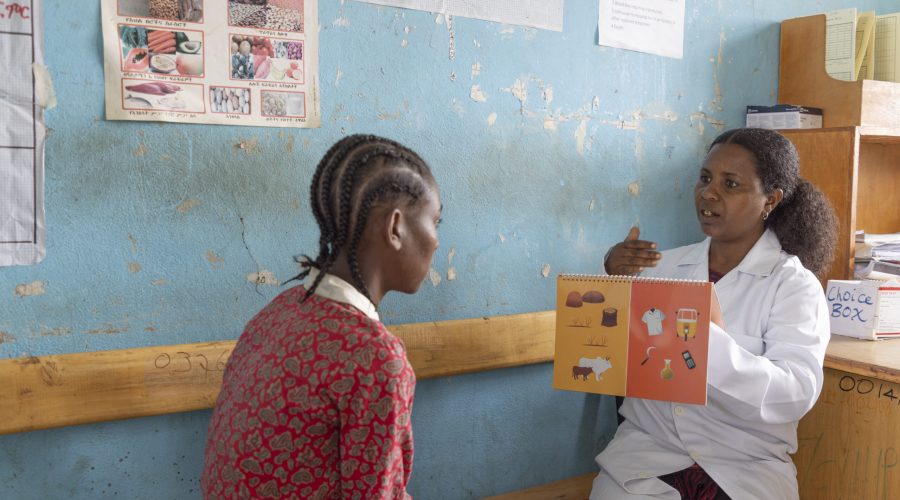
That sense of inevitability began to shift on May 17, 2024, during a visit to the Garbanssa Karche Health Post, where Meseret met Debritu Degife, a Health Extension Worker trained in Smart Start and Counselling for Choice (C4C). The conversation did not begin with contraception. Instead, Debritu encouraged Meseret to reflect on her life goals, financial pressures, and family responsibilities. Together, they discussed how decisions were made within her household, what returning to school would mean for her husband and children, and the kind of future they hoped to build as a family.
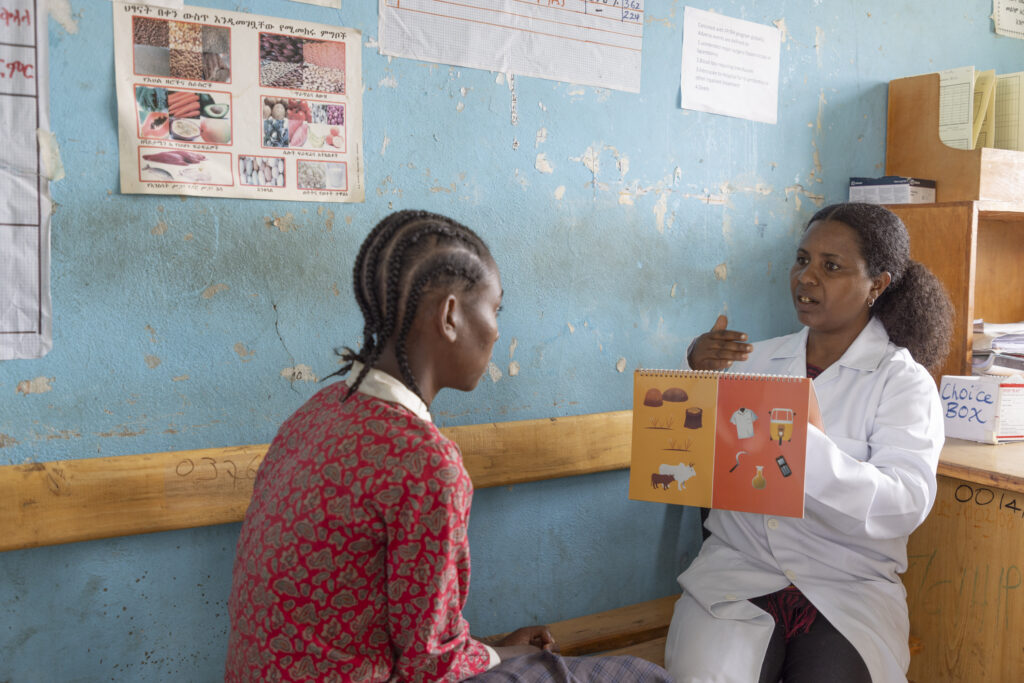
C4C counselling session
“Smart Start begins with life and financial planning. Family planning then becomes a tool that helps women and families create stability and plan for the future they want.”
Using this life and financial planning lens, Debritu supported Meseret to continue these discussions at home, helping her frame family planning as a shared family decision rather than an individual one. When Meseret later spoke with her husband and family, the focus was not on delaying births alone. It was creating time, stability, and opportunity for the whole household. In this context, family planning became part of a broader plan, one that allowed Meseret and her family to move beyond immediate pressure and begin planning the future they wanted.
After thoughtful discussion, Meseret chose Jadelle, a five-year contraceptive implant.
“That counseling session was a turning point in my life,” she says. “We talked about my goals, my children, and how I could return to school. I realized family planning could help me plan my life again.”
With renewed confidence and growing family support, Meseret took a step she once thought was impossible. Four years after leaving the classroom, she re-enrolled in Grade 12. Balancing motherhood and study, she prepared for her national exams and passed.
In 2025, Meseret earned admission to Jinka University, where she chose to study Natural Resource Management.
Returning to school was not only about education. It was also about independence. With the ability to plan her family and her finances, Meseret began to see a future where she could support herself, contribute meaningfully to her household, and make decisions with confidence. Education became the pathway, but choice was the foundation.
Her journey has sparked conversations across Garbanssa Karche and neighboring kebeles about girls’ education, early marriage, and shared decision-making within families. “Meseret turned hardship into opportunity,” says Albene Assefa, a local kebele leader. “Her determination is encouraging other girls to believe in education and take charge of their lives.”
Today, Meseret dreams of completing her degree and becoming a champion for women’s sexual and reproductive health rights in rural Ethiopia. Her journey, from a marriage she did not choose to a future she is actively shaping, shows what becomes possible when young women and their families are given the information, space, and support to plan together.
Through programs like Smart Start and the commitment of frontline health workers like Debritu, young women like Meseret are not only changing their own lives. They are redefining what choice, partnership, and progress look like in their communities.
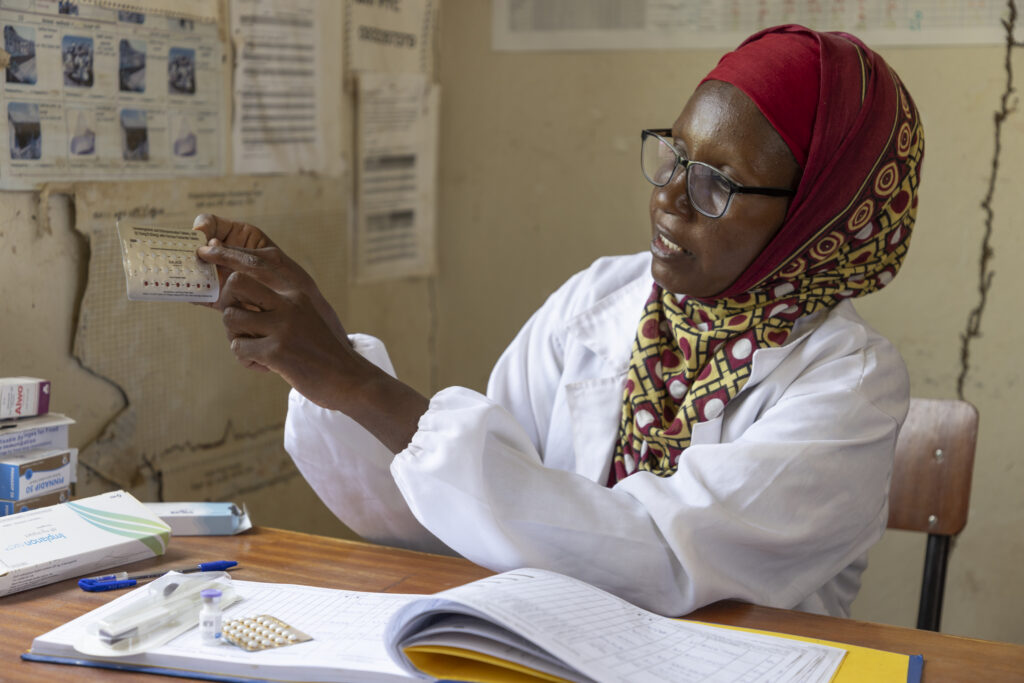
C4C counselling session
By Lalisa Imiru, Quality Assurance and Training Coordinator, Sando Shange, Quality Assurance and Training Officer, and Yared Alemu, Lead, Area Office, PSI Ethiopia
First Published by PSI Ethiopia on Medium