

One of the moments that best captures what A360 meant to me was our early engagement with Ministries of Health to institutionalize A360 and Smart Start. Initially, some government leaders were hesitant about adolescent-centered contraceptive services. When we demonstrated how reproductive health could be layered with economic empowerment, financial planning, and young people’s aspirations, the conversation shifted. It reinforced my belief that sustainable change comes from listening, building trust, using evidence, and demonstrating how innovation responds to national priorities.
I will never forget a community in SNNP, Ethiopia, where an adolescent couple had opened a small shop and intentionally delayed pregnancy while completing their tertiary education. Their story showed me what agency can look like when young people have access to information, services, and economic opportunities.
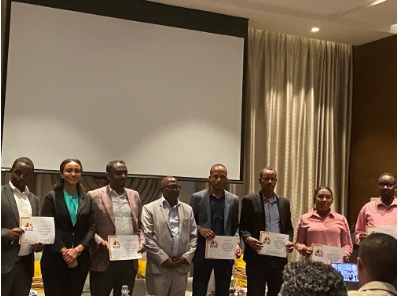
I am most proud that A360 evolved from an innovation pilot proof of concept into evidence, government ownership, and scale. I am especially excited by the commitment of Ethiopia’s Health Extension Workers, whose engagement and increased productivity helped translate Smart Start approaches into quality community-level services. From the DMPA-SC self-care pilot to Smart Start’s institutionalization and national financing, I am equally proud to have witnessed Ethiopia move toward a government-led national scale-up plan for Smart Start, signifying that advocacy and partnership can move from proof of concept to sustainable systems change. In Nigeria, I was inspired by progressive health leadership, particularly in Muslim-majority states, where governments demonstrated strong commitment by allocating domestic resources to family planning programs.